
Modern heating, ventilation, and air conditioning (HVAC) systems do more than maintain comfortable indoor temperatures. They help regulate environmental conditions, support air circulation, and maintain the operating requirements of commercial and industrial facilities.
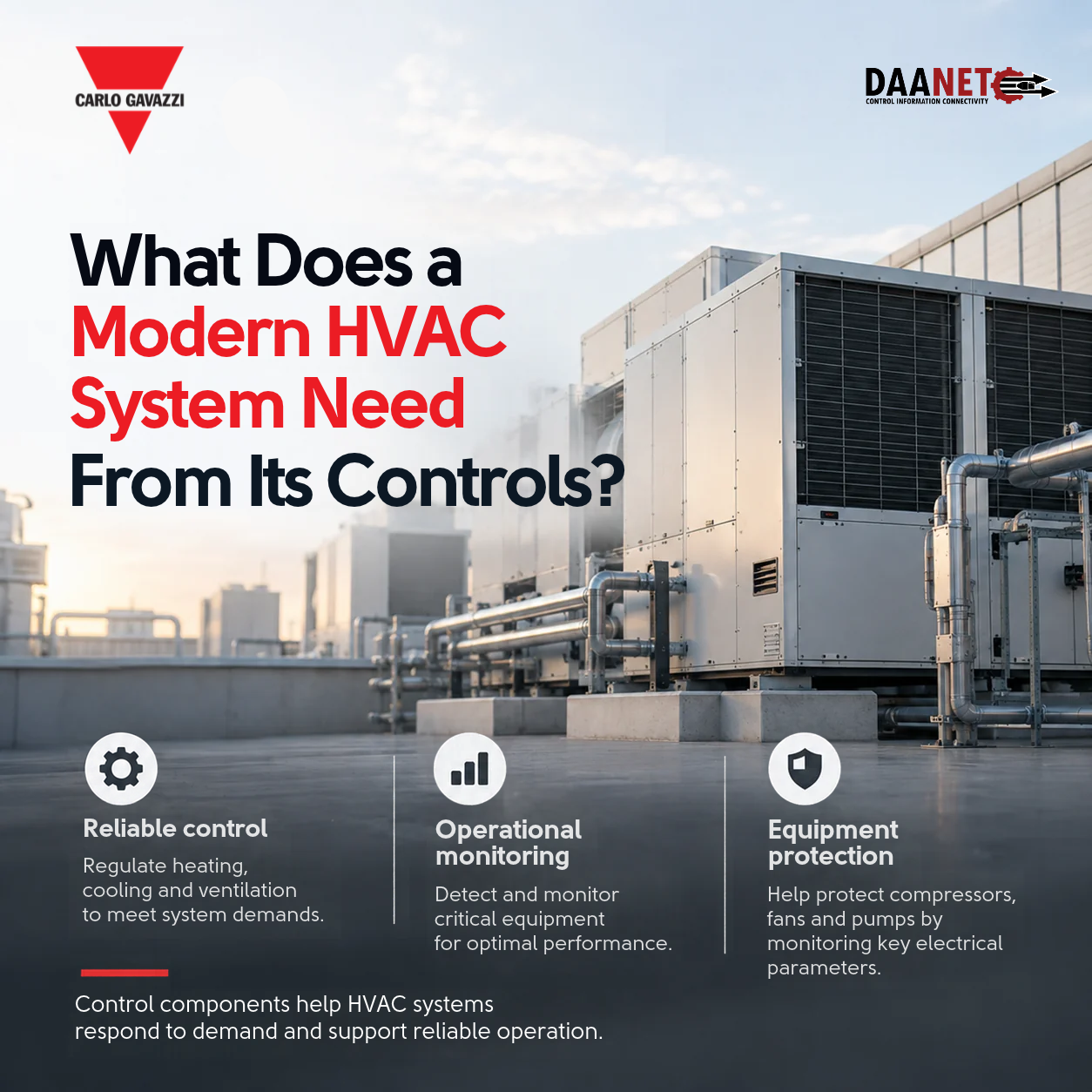
However, reliable HVAC performance depends on more than the mechanical equipment itself. The electrical and automation components controlling these systems also play an important role. Effective control, operational monitoring, and appropriate equipment protection help HVAC installations respond to changing demands and operate according to their intended design.
For engineers, system integrators, and facility managers, understanding these functions is an important step toward selecting suitable components for modern HVAC applications.
1. Reliable Control for Changing HVAC Demands
HVAC requirements rarely remain constant. Outdoor temperatures change, occupancy levels fluctuate, and different areas of a building may require varying levels of heating, cooling, or ventilation.
Control components help HVAC equipment respond to these demands. Depending on the application, they can regulate heating elements, manage electrical loads, or control equipment such as fans and pumps.
Selecting appropriate control devices helps ensure that equipment operates according to the system's design requirements. It can also support strategies aimed at maintaining consistent environmental conditions while managing energy use.
The key is to choose control solutions that match the equipment specifications, operating conditions, and requirements of the overall installation.
2. Operational Monitoring for Greater Visibility
Controlling HVAC equipment is only part of effective system management. Understanding how equipment performs during operation is equally important.
Monitoring electrical parameters and operating conditions can provide useful information about the state of a system. Depending on the devices installed, this information may help maintenance teams recognise unusual operating patterns, investigate potential faults, and determine when further inspection is necessary.
For example, changes in relevant electrical measurements may provide an indication that a fan, pump, or other connected load requires investigation. Although monitoring alone cannot identify every fault, it can support more informed troubleshooting and maintenance decisions.
For facilities that rely on continuous climate control, greater visibility into equipment operation can help teams respond to potential issues before they develop into more significant operational concerns.
3. Equipment Protection to Support Reliable Operation
HVAC installations contain electrical and mechanical components that must operate within their specified limits. Compressors, fans, pumps, and other connected loads can be affected by overloads, overcurrent conditions, and other electrical faults.
Appropriate protection devices help address these risks by responding to specific fault conditions according to their design. Selecting suitable devices and coordinating them with the wider electrical installation is essential to supporting safe operation and reducing the risk of equipment damage.
Protection requirements vary depending on the type of equipment, its electrical characteristics, the installation design, and applicable standards. For this reason, protection should be considered as part of the overall system design rather than as an isolated component selection.
4. Why Control, Monitoring, and Protection Work Together
Although these functions serve different purposes, they contribute to the overall performance of an HVAC system.
● Control helps equipment respond to changing operational demands.
● Monitoring provides visibility into relevant electrical and operating conditions.
● Protection helps address defined electrical risks and fault conditions.
Considering these functions together allows engineers and system integrators to evaluate the wider requirements of an installation, rather than focusing exclusively on individual components.
The result is a more informed approach to equipment selection, system design, and maintenance planning. Ultimately, the objective is to ensure that the selected components are suitable for the application and work together according to the system's operational requirements.
Exploring Carlo Gavazzi Solutions for HVAC Applications
Selecting the right automation components begins with understanding the demands of the application. Whether the priority is controlling electrical loads, monitoring operating conditions, or supporting equipment protection, component selection should be guided by the requirements of the installation.
Carlo Gavazzi offers automation components for a range of industrial and building applications, including HVAC. Its product portfolio provides a starting point for professionals exploring solutions relevant to their control and monitoring requirements.
Explore Carlo Gavazzi's HVAC solutions:
https://www.gavazziautomation.com/en-global/industries/hvac
Final Thoughts
Modern HVAC systems need more than temperature regulation to support dependable operation. Reliable control, meaningful operational monitoring, and appropriate equipment protection each contribute to a well-considered system design.
By evaluating these requirements together, engineers, system integrators, and facility managers can make better-informed decisions about the components used in their installations.
Carlo Gavazzi products are supplied and supported by DAANET across Australia and New Zealand.
Explore Carlo Gavazzi at DAANET
Authorised Australian Distributor of Carlo Gavazzi
📞 Australia: 1300 322 638
📞 New Zealand: 09 887 0542
