
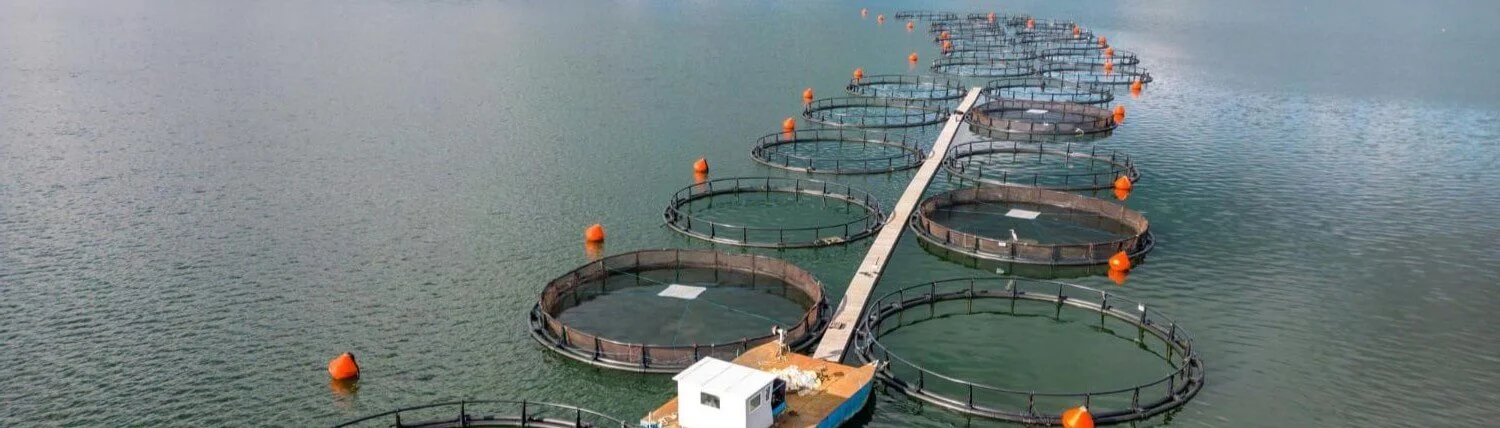
Offshore operations are built around working in challenging and often hard-to-reach environments. For aquaculture companies managing equipment across multiple sea sites, maintaining reliable operations can involve more than monitoring production. It also means finding practical ways to identify, diagnose, and resolve technical issues across geographically dispersed locations.
When a problem requires a technician to travel offshore, even a relatively straightforward technical issue can become a time-consuming and resource-intensive process.
What if more of these issues could be addressed remotely?
The challenge of supporting remote operations
For one of the world's largest aquaculture companies, managing remote sea farms across multiple countries presented a significant connectivity challenge.
Technical teams faced inconsistent access methods, difficulties discovering equipment remotely, and reliance on local jump hosts. Even basic device configuration issues, such as missing IP settings, could create additional complications when remote troubleshooting was limited.
The company needed a more consistent and scalable approach to secure remote access—one that could support its existing operations while accommodating future growth.
A standardized approach to secure remote access
Secomea helped establish a standardized remote access framework across more than 150 offshore aquaculture sites.
Using Secomea SiteManager devices connected to its cloud-based platform, the solution enabled technical teams to identify devices remotely, configure IP settings, and troubleshoot equipment without relying on the same fragmented access methods.
The implementation also replaced unsecured local jump hosts with a more controlled approach to connectivity. User groups were aligned with corporate identities through enterprise Active Directory, helping establish consistent access management across the distributed environment.
Less reliance on physical technician visits
The benefits extended beyond connectivity.
With improved remote device discovery and configuration capabilities, teams could resolve certain technical issues without sending technicians offshore. The company also gained greater visibility into remote connections, controlled third-party access, and audit-ready connection logs.
The framework was designed to support more than 150 sites, with additional capacity for future expansion.
This demonstrates an important opportunity for industrial operations: when technical teams can securely access and troubleshoot equipment remotely, not every issue needs to become a physical service visit.
Connecting operational efficiency with sustainability
Sustainability in industrial operations is not limited to energy consumption or equipment efficiency. It also involves examining how work is carried out, how resources are used, and whether certain activities can be made more efficient.
Reducing unnecessary travel for technical support is one practical part of that conversation.
Remote access does not eliminate the need for on-site maintenance. Some issues will always require physical inspection or intervention. However, having the ability to diagnose and resolve suitable problems remotely can help companies make better decisions about when a site visit is actually necessary.
For organizations operating across remote and geographically dispersed locations, that can mean a more efficient approach to technical support.
Ready to Make Remote Operations More Efficient?
Every unnecessary site visit is an opportunity to rethink how your operations are connected.
With Secomea's secure remote access solutions, your team can gain better visibility, troubleshoot equipment remotely, and make more informed decisions about when on-site intervention is truly needed.
It's time to rethink how your team connects, supports, and maintains remote operations.
Get in touch with DAANET to discover how Secomea can help your business build a more connected, efficient, and sustainable approach to industrial operations.
Connect smarter. Operate more efficiently. Move towards a lighter footprint.
