
Körber SPE6-P2: Integrated Automation for Pharmaceutical Packaging
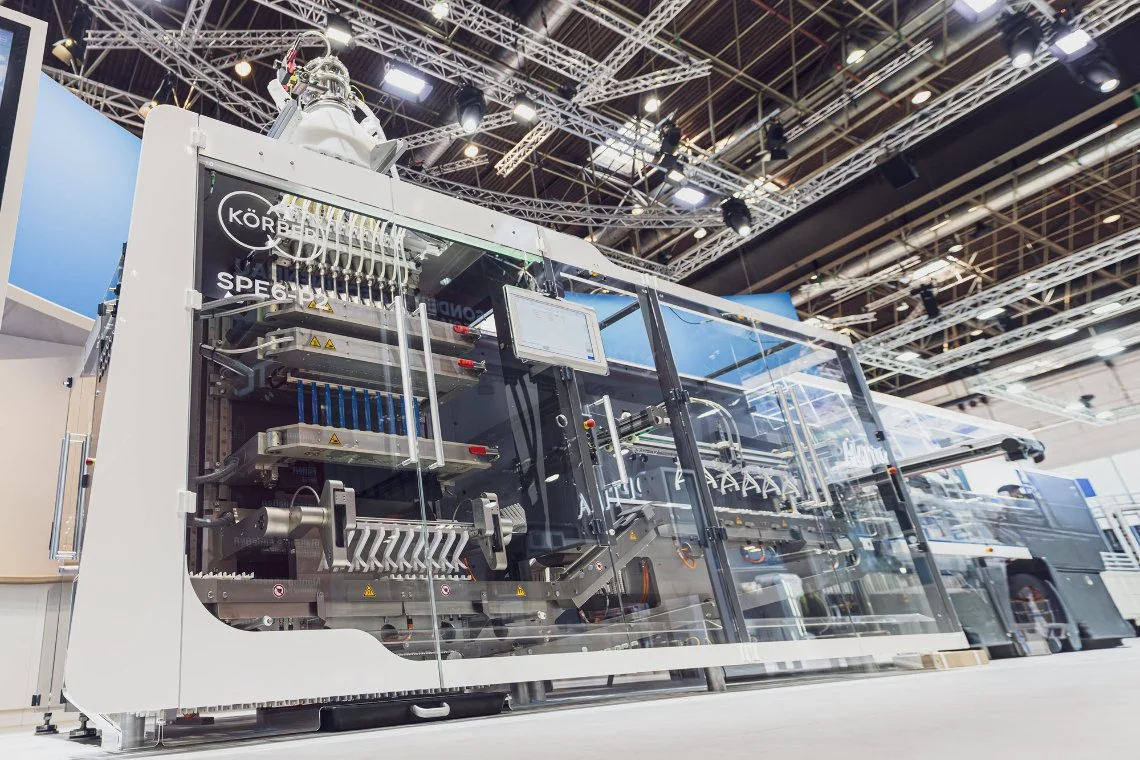
Modern pharmaceutical packaging requires more than high-speed machinery. Manufacturers need precision, flexibility, and coordinated processes that can adapt to changing production requirements while maintaining consistent performance.
The Körber SPE6-P2 pharmaceutical stick-pack packaging machine provides a real-world example of how different automation technologies can be integrated to support these demands.
Featured in a B&R Industrial Automation case study, the machine demonstrates how transport technology, motion control, robotics, and machine control can work together within a modern packaging application.
Bringing Multiple Technologies Together
Packaging machines often involve several processes that must operate in coordination, from product transport and positioning to handling and packaging. Integrating these functions requires an automation architecture that allows the different technologies to work together effectively.
In the SPE6-P2 application, Körber combines its transport technology with B&R's ACOPOStrak intelligent transport system. The wider solution also incorporates robotics, motion control, and the X20 control system. This approach allows technologies to be selected according to the needs of individual processes while contributing to the operation of the complete machine.
Flexibility for Changing Production Requirements
Pharmaceutical packaging equipment must accommodate different product formats and production requirements. Machine builders therefore need to consider how transport, control, and motion systems will respond when formats or operating conditions change.
An integrated automation approach can help support flexible machine design by coordinating the technologies involved in the production process.
In the SPE6-P2 case study, the combination of transport technologies supports flexible product transfer and format changes. The machine is designed to process up to 600 stick packs per minute, illustrating the production demands that the overall system is built to address. Actual performance depends on the machine configuration, product, and operating conditions.
What Machine Builders Can Learn
The SPE6-P2 example highlights several considerations for businesses developing automated packaging equipment.
1. Start with the application.
Identify the production requirements, throughput targets, product formats, and handling needs before selecting automation components.
2. Consider the complete system.
Transport, robotics, motion control, and machine control should be evaluated as parts of the overall machine architecture rather than as isolated components.
3. Plan for flexibility.
Consider how future product changes, format adjustments, and evolving production requirements may affect machine design and integration.
4. Evaluate integration early.
Assessing how technologies communicate and coordinate during the design stage can help machine builders make informed decisions about system architecture and implementation.
The Value of an Integrated Automation Approach
The Körber SPE6-P2 case study demonstrates how different technologies can be combined to address the requirements of a complex pharmaceutical packaging application. For machine builders, the broader lesson is that automation performance depends not only on the capabilities of individual components, but also on how effectively those components work together.
At DAANET, we help Australian businesses explore automation components and solutions aligned with their engineering and application requirements.
Whether you're developing new machinery or evaluating an existing automation system, understanding the application is an important first step toward selecting a suitable solution.
Planning your next automation project?
Contact DAANET to discuss your machine-building and industrial automation requirements.
Website: https://daanet.com.au
Email: sales@daanet.com.au
Phone: 1300 322 638
Reference
B&R Industrial Automation — Precision where it matters: Open hybrid transport concepts for pharmaceutical packaging lines.
Read the original case study: https://www.br-automation.com/en-us/about-us/press-room/precision-where-it-matters-open-hybrid-transport-concepts-for-pharmaceutical-packaging-lines/
