
Why Redundancy Matters in Industrial Automation: Maximising Uptime with B&R
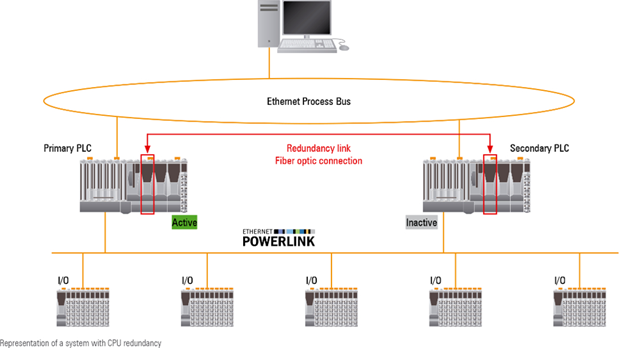
In today's industrial environment, unplanned downtime can have significant consequences. From production delays and increased maintenance costs to reduced product quality and missed delivery deadlines, even a brief interruption can impact an entire operation.
That's why industrial automation redundancy has become a critical consideration in modern high-availability control systems. By designing control and communication systems with built-in redundancy, manufacturers can minimise the risk of unexpected failures and maintain continuous operation—even when hardware or network issues occur.
What Is Redundancy in Industrial Automation?
Redundancy is the practice of incorporating backup components or communication paths into an automation system so that if one element fails, another can immediately take over. The objective is simple: maximise system availability while minimising production downtime.
B&R redundancy solutions provide protection at both the controller and network levels. These technologies can be implemented independently or combined to create highly available automation systems for critical industrial applications.
Controller Redundancy: Keeping Production Running
Controller redundancy uses two identical controllers working together within the same automation system. One controller actively manages the machine while the second remains synchronised and ready to take over if required.
If the primary controller experiences a fault, the secondary controller automatically assumes control within milliseconds—without requiring any operator intervention—allowing production to continue with minimal interruption.
One of the key advantages of B&R redundancy is that it is fully integrated into the B&R Automation Runtime platform. This eliminates the need for complex third-party redundancy software and simplifies implementation within existing engineering workflows. Standard X20 controllers can be configured as redundant through software, helping reduce engineering complexity while improving system reliability.
Benefits of Controller Redundancy
● Automatic switchover within milliseconds
● No operator intervention required during controller failover
● Microsecond-level data synchronisation
● Uses standard B&R X20 controllers
● Integrated into the B&R Automation Runtime platform
● Simple software-based configuration
● Supports controller replacement without stopping production
● Helps maximise machine availability
Network Redundancy: Maintaining Reliable Communication
Reliable communication between controllers, I/O devices, and other automation components is equally important. Network redundancy helps ensure that communication continues even if a cable or network connection fails.
B&R provides two approaches to network redundancy using POWERLINK technology.
Ring Redundancy
Ring redundancy connects POWERLINK devices in a closed loop. If communication is interrupted at any point, the redundancy manager immediately redirects data through the opposite direction of the ring, ensuring all devices remain connected without interrupting operation.
Cable Redundancy
Cable redundancy uses two independent communication paths connected to every network node. Should one cable become damaged or disconnected, communication automatically switches to the remaining cable. This approach is particularly valuable in process industries where separate cable routing is often required to improve reliability.
Why Combine Controller and Network Redundancy?
For applications where high availability is essential, combining controller redundancy with network redundancy provides an additional level of protection.
This integrated approach helps safeguard both the control hardware and the communication infrastructure, reducing the likelihood of production interruptions caused by controller failures or network faults. The result is a more resilient automation system capable of maintaining stable operation in demanding industrial environments.
Applications Where Redundancy Delivers the Greatest Value
Industrial automation redundancy is especially beneficial in industries where continuous operation is critical, including:
● Food and beverage manufacturing
● Water and wastewater treatment
● Mining and resources
● Process industries
● Pharmaceuticals
● Energy and utilities
● High-speed manufacturing
● Critical infrastructure
For these environments, improving system availability helps reduce costly downtime, improve operational reliability, and support long-term productivity.
Partner with DAANET
As the Authorised Australian Distributor for B&R Automation, DAANET provides genuine B&R automation solutions backed by local technical expertise and support. Whether you're designing a new high-availability control system or upgrading an existing installation, our team can help you determine the most suitable B&R redundancy strategy for your application.
To learn more about B&R Redundancy technology, visit:
https://www.br-automation.com/en/technologies/redundancy/
You can also explore DAANET's complete range of B&R Automation solutions here:
